
 Tiếng Việt
In the context of increasingly stringent international safety, environmental, and compliance requirements, proactively updating international vetting standards has become a prerequisite for maritime transport businesses. With a focus on sustainable and professional development, Thang Long Maritime Joint Stock Company (TLM) participated in the international online seminar “Advancing Vessel Safety: An Update to RISQ 3.2 and RightShip Inspections” organized by RightShip on November 26, 2025.

RightShip is a world-leading organization in risk and safety assessment for bulk carriers. Through its proprietary inspection and scoring system for Bulk Carriers, RightShip is widely used by shippers, charterers, and international partners as a key standard in the vetting process. At the workshop, RightShip announced key changes to its Ship Inspection Questionnaire (RISQ), most notably the release of the new RISQ 3.2 version, clearly reflecting the trend towards a “streamlined yet rigorous” approach to ship safety assessment.
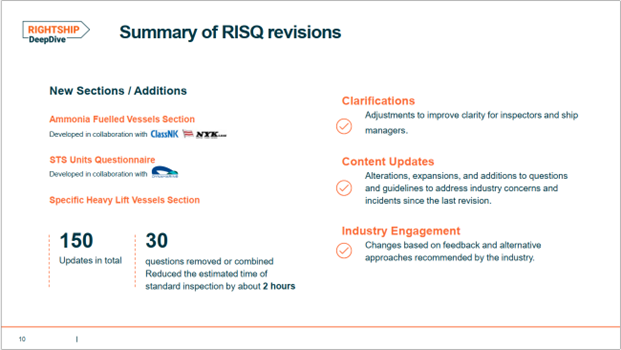
RightShip has reduced approximately 30 questions compared to the previous version, shortening the average onboard inspection time by about two hours. This streamlining does not compromise safety requirements; on the contrary, it allows for the concentration of resources on high-risk areas while reducing paperwork burden for crew members and ship management. Simultaneously, RISQ 3.2 has been extended to specialized vessel groups such as heavy-lift vessels, project vessels, alternative fuel (ammonia) vessels, and ship-to-ship (STS) units, demonstrating RightShip’s efforts to build a comprehensive assessment framework that closely reflects operational realities and aligns with global fleet development trends.
For bulk carriers, RISQ 3.2 focuses heavily on core risks associated with the structure and operation of bulk carriers. Specifically, hatch covers are subject to strict control, requiring periodic gap measurements to ensure watertightness and structural safety. Furthermore, lifting equipment and cranes are required to undergo periodic rocking tests to promptly detect potential mechanical and structural hazards. The mooring system is also more thoroughly assessed, ensuring minimum design strength to minimize risks when anchoring in port in adverse weather conditions.
Specifically for coal carriers and cargo ships with gas emissions, RightShip emphasizes monitoring cargo hold temperature, gas concentrations, and bilge water conditions to prevent spontaneous combustion, structural corrosion, and risks to crew safety. Record keeping, monitoring, and operational logs are considered crucial to demonstrating the ship’s risk control capabilities during inspections.
Beyond technical aspects, the RISQ 3.2 system comprehensively raises the standards for safety management according to the ISM Code. The role of the Safety Officer is enhanced through the requirement for periodic full-ship inspections using checklists. Simultaneously, Superintendents are required to conduct substantive ship audits every six months with clear reports, rather than merely formalities. The management of enclosed spaces has been updated according to the latest IMO guidelines, requiring comprehensive gas measurements and strict adherence to cargo hold access permitting procedures, as well as the effective application of the “Stop Work Authority” mechanism to protect crew safety.
Another important point emphasized by RightShip is the change in the ship age trigger. According to the plan, from 2026 to 2027, ships aged ten to twelve years will be subject to mandatory inspection reports. This creates an urgent need for ship management companies to plan periodic inspections, prepare budgets, and train crews early to avoid being caught off guard when the new standards officially come into effect.
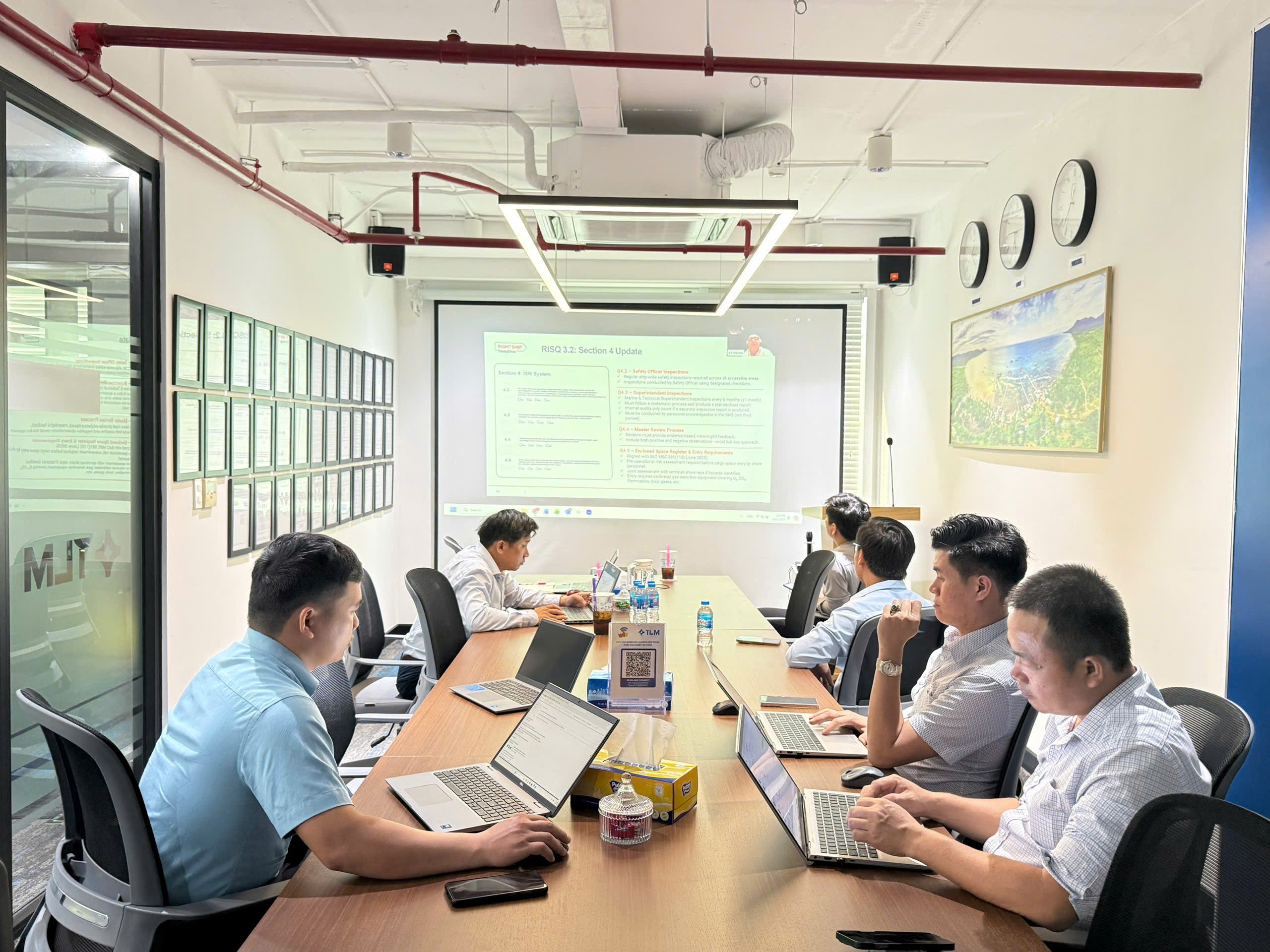
Through participating in the workshop, TLM once again demonstrated its strong commitment to improving its bulk carrier fleet management capabilities and gradually standardizing its safety management system according to the latest international standards. Proactively addressing and implementing RightShip requirements not only enhances safety in vessel operations but also strengthens TLM’s reputation in the eyes of international shippers and partners.
Participating in the RightShip Webinar 2025 is a crucial professional training activity, while also affirming TLM’s long-term development direction: building a safe, professional, and sustainable Bulk Carrier fleet, ready to meet the increasingly demanding requirements of the global shipping market.